
Compressor Stations · Permian Basin
Compressor Station Construction Contractor
SPC sets and mechanically integrates compressor packages, fabricates high-pressure process piping, and executes brownfield tie-ins for gas compression facilities across the Delaware and Midland Basins.
Package → Piping → Tie-In
Setting. Fabrication. Testing. Turnover.

Contractor Qualification & Field Compliance
Safety Documentation & Mechanical Field Readiness
Before mobilization, project teams need current safety documentation, insurance records, personnel qualifications, and project-specific welding procedures. SPC maintains its contractor and workforce records for operator review, helping project managers and safety personnel confirm requirements before mechanical construction begins.
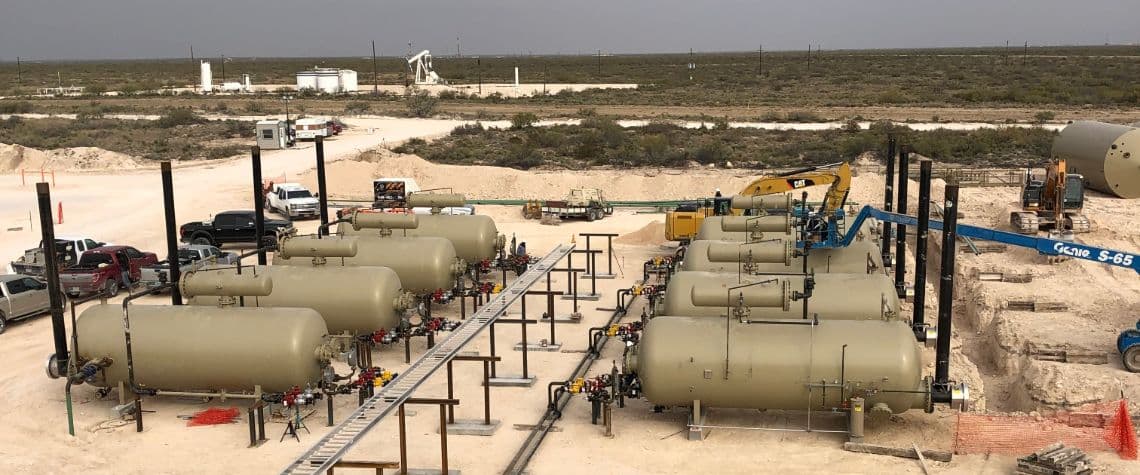
Compliance & Field Readiness
Welding Procedures & Personnel Qualifications
Welding is performed under applicable qualified welding procedure specifications, with welder qualification records maintained for the processes, materials, and project requirements involved.Contractor Compliance Profiles
Safety programs, insurance records, and company qualification documents are maintained through required contractor compliance platforms, including ISNetworld and Veriforce.Worker Safety Credentials
Field personnel complete required orientations and maintain applicable site credentials, including SafeLandUSA training where required, before entering active facility locations.Permian Basin Mobilization
From Kermit, Texas, SPC mobilizes welding rigs, pipe fabrication equipment, rigging tools, and mechanical crews to greenfield and brownfield compressor station projects across West Texas and southeastern New Mexico.MECHANICAL CONSTRUCTION SCOPE
Four-Phase Compression Facility Execution
SPC executes compressor station mechanical construction through four distinct project phases. The sequence maintains dimensional control from package setting through final tie-in execution, reducing the risk of forced fit-up while keeping the work aligned with IFC drawings, OEM requirements, and project specifications.
[ 01 ]
Package Receiving, Setting & Mechanical Integration
Positioning packaged compression equipment to IFC drawings and OEM requirements without transferring unintended loads to the skid.Receiving & Offloading
Mechanical Integration
External Connection Alignment
Positioning, Leveling & Anchoring
[ 02 ]
High-Pressure Process Piping, Headers & Manifolds
Fabricating and installing suction, discharge, recycle, bypass, and fuel-gas piping under qualified welding procedures.Field Fit-Up & Qualified Welding
Flange Assembly & Valves
Supports, Guides & Anchors
Header & Manifold Assembly
[ 03 ]
Gas Treatment, Liquid Handling & Aerial Cooler Connections
Installing scrubber, filter, and liquid-handling piping together with elevated aerial cooler connections and mechanical isolation assemblies.Gas Treatment Piping
Liquid Handling & Drains
Aerial Cooler Connections
ESD, Isolation & Blowdown
[ 04 ]
Pressure Testing, Brownfield Tie-Ins & Mechanical Turnover
Verifying system integrity and executing authorized tie-ins within planned isolation and outage windows.Hydrostatic / Pneumatic Testing
Tie-In Spool Staging
Authorized Tie-In Execution
Reinstatement & Turnover Records
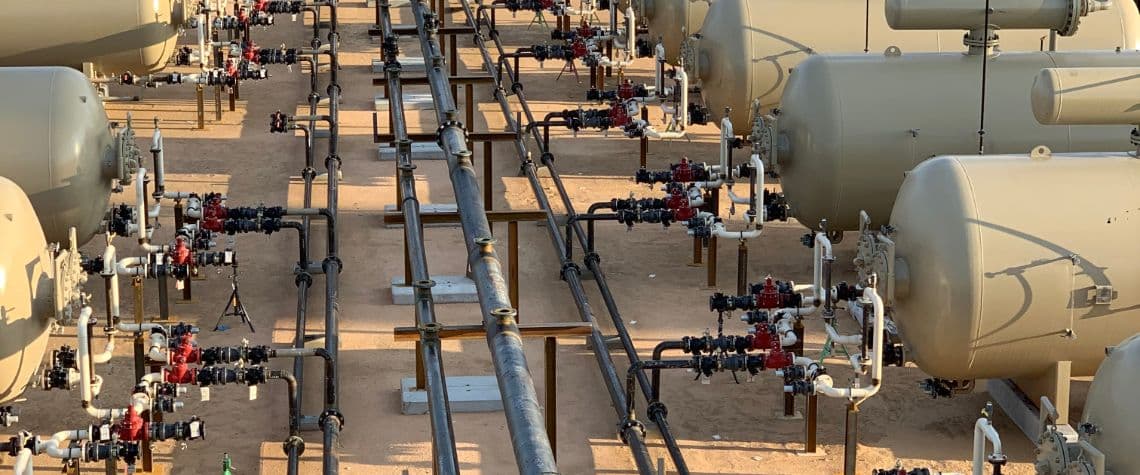
Construction Risk Management
Addressing Mechanical Challenges in Compression Facilities
Compression facilities operate under machinery vibration, pressure pulsation, high operating pressures, and repeated thermal movement. Controlled mechanical execution reduces the risk of forced fit-up, flange leakage, piping fatigue, and delays during brownfield outages.
[ 01 ]
Nozzle & Flange Strain from Forced Fit-Up
THE RISK
Forcing misaligned piping onto package connections can transfer unintended loads to the packaged equipment, contributing to flange leakage, gasket damage, and long-term wear on rotating machinery interfaces.SPC APPROACH
SPC verifies fit-up dimensions, support placement, flange alignment, and connection clearances before bolt-up, reducing the risk of forced or excessive piping loads at package connections.[ 02 ]
Vibration, Pulsation & Thermal Movement
THE RISK
Compressor station piping is exposed to pressure pulsation, machinery vibration, and thermal expansion during operation. Missing or misplaced supports can accelerate piping fatigue, weld cracking, and support wear.SPC APPROACH
Specified clamps, guides, anchors, restraints, and elevated supports are installed in the locations and orientations shown on IFC drawings, preserving the clearances required for the designed piping system.[ 03 ]
Flange Assembly & High-Pressure Joint Integrity
THE RISK
High-pressure flange integrity depends on proper alignment, component condition, gasket installation, and controlled bolt loading. Uncontrolled assembly leads to leaks, rework, and delayed start-up.SPC APPROACH
Flange faces and fit-up are inspected, specified gaskets and bolting materials are installed, and lubrication and tightening are completed according to the approved project procedure using calibrated equipment where required.[ 04 ]
Brownfield Tie-Ins Within Limited Outage Windows
THE RISK
Brownfield tie-ins must be completed within defined isolation and outage windows. Missing spools, tools, or documentation extends the outage and impacts downstream operations.SPC APPROACH
Field dimensions are verified and tie-in spools prepared before shutdown, with valves, gaskets, bolting materials, tools, and required documentation staged before cut-in work begins.— Request Pricing
Request a Compressor Station Construction Bid
Send us your project specifications, drawing packages, scope documents, or outage schedule and we will prepare a commercial proposal.— Contact
TALK TO SPC.
Tell us what you’re scoping. An operations lead will respond within one business day.
PHONE
(832) 683-7470
HQ
P.O. Box 782
Kermit, TX 79745
Kermit, TX 79745
HOURS
Mon–Fri · 08:00–17:00 CT
— Headquartered · Kermit, TX