
SWD & Produced Water Infrastructure
Saltwater Disposal Facility Construction
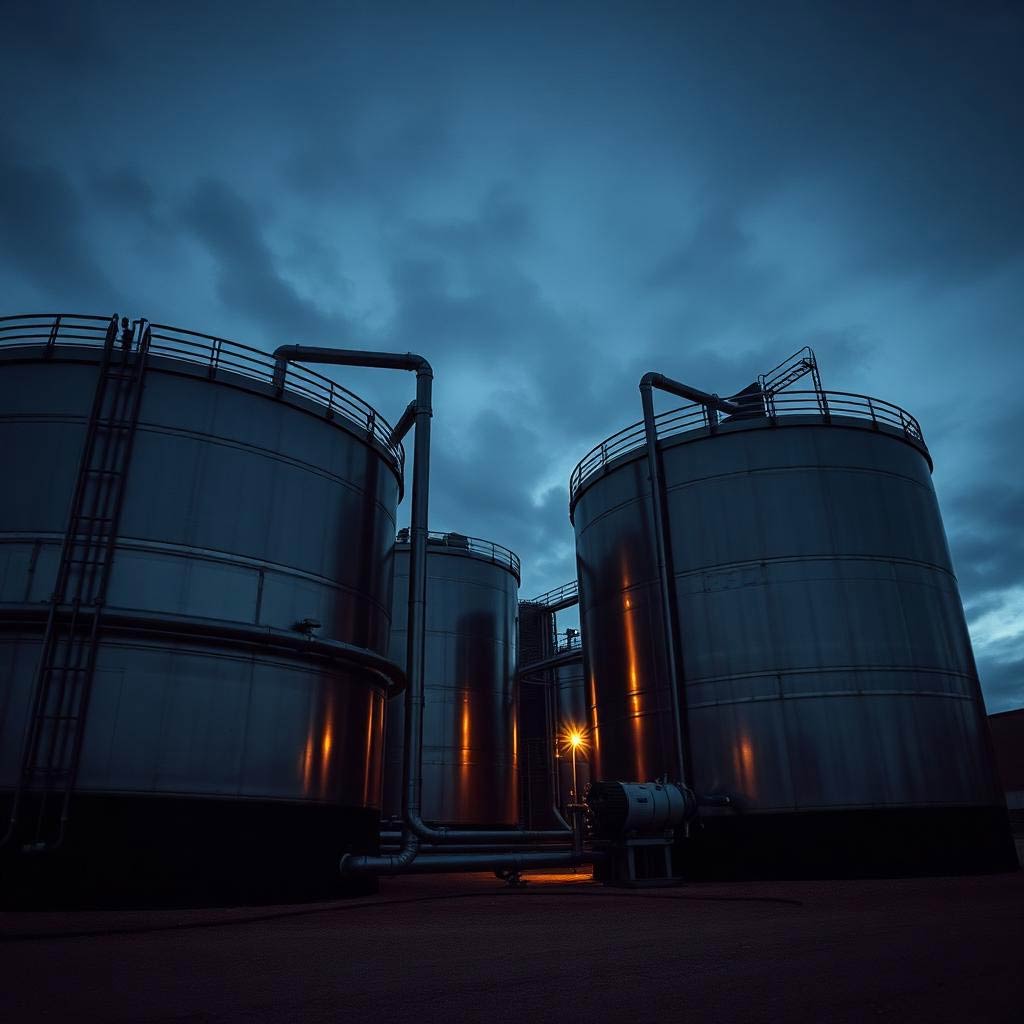
SPC builds and expands the surface infrastructure used to receive, condition, store, and inject produced water. From civil construction and tank connections to process piping, pump installation, manifolds, and brownfield tie-ins, our Kermit-based crews execute demanding SWD projects throughout the Delaware and Midland Basins.
Subgrade → Mechanical CompletionTanks. Pumps.
Tanks. Pumps.
Manifolds. Tie-Ins.
— Contractor Qualification & Field Compliance
Documentation in Place for Operator Review
Before an SWD construction crew reaches the facility, the operator needs current safety programs, insurance records, worker qualifications, and project-specific documentation. SPC maintains its contractor information and personnel records for review through established industry platforms, helping project teams identify requirements and complete onboarding before mobilization.

Compliance & Field Readiness
Welder Qualification Records
Welder qualifications are maintained by process, material, and position for review against applicable codes and project specifications.Contractor Compliance Profiles
Company safety, insurance, and qualification information is maintained through ISNetworld and Veriforce for operator review.Worker Safety Training
Required safety orientations and worker-level credentials, including SafeLandUSA training where applicable, are documented before personnel are assigned to the project.Permian-Based Mobilization
From Kermit, Texas, SPC can deploy crews and equipment to SWD projects throughout the Delaware and Midland Basins.— Surface Infrastructure & Construction Scope
SWD Construction from Subgrade to Mechanical Completion
Saltwater disposal construction depends on how civil, structural, and mechanical scopes come together in the field. SPC coordinates its work around approved drawings, equipment requirements, and operating constraints so foundations, tanks, piping, pumps, and tie-ins are installed in the proper sequence.
FIELD SERVICE
Civil → Containment → Tanks → Piping → Pumps → Tie-Ins
[ 01 ]
SCOPE
Site Civil, Foundations & Containment
Preparing the facility to support continuous water handling, heavy equipment loads, and environmental containment requirements.Tank Foundations & Equipment Pads
Construction of specified tank ring walls, concrete foundations, pump pads, structural slabs, and equipment supports.Secondary Containment
Installation of containment walls, impervious liner systems, sealed penetrations, pipe boots, and associated drainage features.Site Development
Subgrade preparation, compaction, grading, stormwater control, access roads, truck circulation areas, trenches, crossings, and underground utility corridors.[ 02 ]
SCOPE
Water Receipt, Storage & Treatment Systems
Building the receipt, storage, and treatment infrastructure that supports settling, separation, filtration, and stable flow to the injection system.Pipeline & Truck Receipt Systems
Construction of incoming water headers, truck unloading connections, receipt manifolds, isolation points, and transfer piping.Tank & Vessel Connections
Piping for receipt tanks, settling tanks, skim tanks, gunbarrels, storage tanks, and other specified separation equipment.Filtration & Chemical Treatment
Mechanical installation and piping integration for strainers, filtration skids, chemical-injection connections, drains, overflows, equalization lines, and oil-recovery systems.[ 03 ]
SCOPE
Pump Installation, Manifolds & Injection Piping
Executing the high-volume and high-pressure systems that move treated produced water from storage to the disposal well.Transfer & Injection Pumps
Setting, anchoring, connecting, and aligning centrifugal transfer pumps, charge pumps, and triplex or quintuplex injection pumps according to project and manufacturer requirements.Suction & Discharge Piping
Installation of specified suction headers, pump connections, discharge piping, bypasses, and engineered supports for high-pressure lines.Manifold Fabrication
Shop prefabrication and field fit-up of receipt, transfer, injection, split-flow, and well-routing manifolds.Pulsation & Overpressure Systems
Installation of specified pulsation dampeners, pressure-relief devices, return piping, anchors, guides, and heavy-duty pipe supports.[ 04 ]
SCOPE
Facility Integration, Isolation & Brownfield Work
Connecting the mechanical systems, instruments, and facility expansions required to bring an SWD online or increase existing capacity.Brownfield Tie-Ins
Field verification, prefabrication, isolation planning, and execution of tie-ins during coordinated operating or shutdown windows.Valves & Flow Control
Installation of isolation valves, check valves, control valves, pressure-relief equipment, bypasses, drains, and accessible operating points.Mechanical Instrument Installation
Installation of flow-meter spools, gauges, transmitters, instrument taps, valve manifolds, ESD valves, and related mechanical connections.Testing & Commissioning Support
Pressure testing, flushing, leak checks, mechanical completion, punch-list correction, and support for operator-led commissioning and startup.— SWD Construction Risk Control
Field Controls for Critical SWD Interfaces
An incorrect material, missed elevation, field-routed restriction, or incomplete test record can delay startup and create problems after the facility enters service. SPC uses material verification, dimensional control, qualified installation procedures, coordinated tie-ins, and documented testing to execute the surface facility according to approved IFC drawings and equipment requirements.
[ 01 ]
Produced-Water Corrosion, Erosion & Material Compatibility
THE RISK
Produced water exposes piping systems to high salinity, suspended solids, scale, treatment chemicals, and other service conditions that can accelerate corrosion, erosion, and joint failure. Installing an incorrect component or improperly joining the specified material can create an early leak or recurring maintenance point.SPC APPROACH
Materials are checked against approved line classes, bills of material, and project specifications before installation. Required welding and material-joining work is performed using qualified procedures applicable to the specified system and service, with required documentation maintained through completion.[ 02 ]
Suction-Side Restrictions & Pump Starvation
THE RISK
Incorrect pump elevations, improperly routed suction piping, restrictive field changes, or poorly supported connections can interfere with the hydraulic conditions required by transfer and injection pumps. The result may be unstable operation, cavitation, reduced capacity, or accelerated equipment wear.SPC APPROACH
SPC installs pumps, suction headers, charge-pump connections, and associated piping according to approved elevations, dimensions, straight-run requirements, and manufacturer instructions. Field conflicts are documented and routed for resolution before affected piping is fabricated or installed.[ 03 ]
Settling, Filtration & Process Flow
THE RISK
Incorrect vessel connections, missed elevations, or improperly routed equalization, overflow, and transfer lines can disrupt the designed flow path through settling, skimming, filtration, and chemical-treatment systems. This can allow more solids or residual hydrocarbons to reach downstream equipment.SPC APPROACH
Receipt manifolds, tank connections, filtration skids, drains, overflows, and treatment tie-ins are installed to the specified dimensions, elevations, slopes, and flow direction. Dimensional checks help preserve the process sequence established in the approved design.[ 04 ]
Secondary Containment & Release Exposure
THE RISK
Because an SWD receives and stores produced water continuously, a leaking connection or failed containment detail can escalate quickly into a reportable release, cleanup expense, and operational interruption.SPC APPROACH
SPC constructs specified containment walls, slabs, liner systems, drainage features, and sealed penetrations according to approved civil and environmental details. Subgrade condition, liner placement, pipe boots, and penetrations are inspected as required before the work is covered or placed in service.[ 05 ]
Brownfield Tie-Ins & Disposal Downtime
THE RISK
Pump replacements, manifold modifications, and new lateral connections can interrupt disposal capacity when field conditions, isolation requirements, or tie-in dimensions are not confirmed before the operating window begins.SPC APPROACH
SPC coordinates tie-in sequencing with the operator's approved isolation and outage plan. Field dimensions are verified, assemblies are prefabricated where practical, and required materials, equipment, and test procedures are prepared before the shutdown window.[ 06 ]
Pressure Control, Measurement & Operating Limits
THE RISK
Incorrect component ratings, improper flow-meter orientation, misplaced instrument connections, or incorrectly installed relief equipment can affect pressure control, measurement reliability, and the operator's ability to document compliance with permitted injection limits.SPC APPROACH
Piping components, valves, relief devices, meter spools, and instrument connections are checked against approved specifications before installation. SPC installs the mechanical components in the locations and orientations shown on the IFC drawings and supports required testing, inspection, and operator-led commissioning.— Request Pricing
Request Pricing for Your SWD Construction Project
Send SPC your scope, current drawings, bid schedule, and known site requirements. Our team will review the package, identify any information needed to define the work, and follow up regarding scope, schedule, and next steps.— Contact
TALK TO SPC.
Tell us what you’re scoping. An operations lead will respond within one business day.
PHONE
(832) 683-7470
HQ
P.O. Box 782
Kermit, TX 79745
Kermit, TX 79745
HOURS
Mon–Fri · 08:00–17:00 CT
— Headquartered · Kermit, TX